How to choose the right office space for your business in Sofia? A step-by-step guide
Choosing an office is no longer a simple property decision. For many companies, it is now a strategic business decision that affects recruitment, productivity, client perception, operating costs, and long-term flexibility. The right workplace can support growth. The wrong one can quietly create friction every day: longer commutes, inefficient layouts, poor meeting conditions, limited parking, weak building management or a space that no longer fits after the team changes.
This is especially true in Sofia. The city’s office market has become more mature, more competitive, and more segmented. According to CBRE’s Q1 2026 Sofia office report, the market remained stable, supported by sustained demand for high-quality space and increased workplace attendance. Total modern office stock reached around 1.9 million sq m, while vacancy continued to decline, and occupier focus remained on quality, sustainability and flexibility.
That context matters. Companies are not simply searching for available square meters. They are looking for office space that can reflect the way they work today and the way they expect to grow tomorrow. For a startup, that may mean flexibility and cost control. For an international company, it may mean accessibility, image, security, and operational reliability. For a growing local business, it may mean moving from an improvised office to a more professional environment.
The following guide looks at the main steps a company should consider before choosing its next office in Sofia, using ETC European Trade Center as one example of how a modern business complex can combine location, infrastructure and workplace quality.
Office space in Sofia Bulgaria: Key factors to consider before choosing
The search for office space in Sofia Bulgaria should begin with one essential question: what role should the office play in the business? Some companies need representative headquarters. Others need an efficient operational base. Some need a compact office for a focused team, while others need larger floors, meeting rooms, client areas, and expansion options.
Before comparing buildings, it is worth defining the real business case behind the move. Is the company hiring? Is it moving from remote to hybrid work? Does it need better access for employees? Are clients visiting regularly? Will the team grow in the next 12 to 24 months? These questions are not secondary. They determine whether space will remain useful after the first few months.
In Sofia, the location also carries practical weight. A good address should not only look strong on a business card. It should reduce daily complexity. Access by car, public transport links, nearby services, parking options and proximity to major business routes all influence how the office functions.
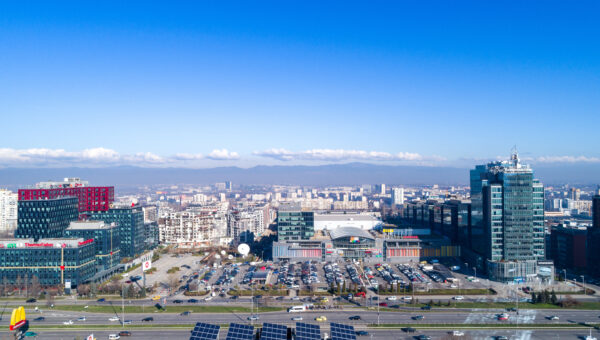
ETC, for example, is positioned on Tsarigradsko Shose Boulevard and presents itself as a business hub designed for growth, collaboration, and international success. The complex states that it is located seven minutes from downtown Sofia and three minutes from the airport, with public transport connections, over 30 bus lines and a dedicated underground tunnel for access from all directions.
For companies that host partners, manage regional teams, or employ people from different parts of the city, that type of accessibility can become a serious operational advantage.
Define your business needs and long-term goals
The first step is to be honest about what the business actually needs. Many companies either overestimate or underestimate their office requirements. They rent too much space because they expect rapid growth, or they choose too little space because they focus only on current headcounts.
A better approach is to map the office around functions, not only people. How many employees need fixed desks? How many work hybrid? How many meeting rooms are necessary during peak hours? Does the company need private offices, phone booths, open collaboration areas, storage, a reception zone or a boardroom? How often do external visitors come to the office?
Long-term goals should also influence the decision. A company that expects to expand may need a building where additional space can be negotiated later. A team that expects structural changes may need flexible layouts rather than rigid partitions. A business preparing to attract international partners may need a more representative environment than previously required.
The office should not only solve today’s problem. It should give the company room to evolve without forcing another relocation too soon.
Select the ideal location and budget
Location and budget are often treated as separate decisions. In practice, they are closely connected. A lower rent in a poorly connected area may cost the company more through lost time, weaker employee satisfaction or a less convincing client experience. A more expensive location may be justified if it improves access, strengthens the brand, and reduces operational friction.
The budget should include more than base rent. Companies should review service charges, parking costs, fit-out expenses, utility expectations, maintenance rules, deposit requirements, and the cost of future changes to the layout. The total cost of occupancy is usually more important than the headline price per square meter.
The ideal location should also match the company’s daily rhythm. A consulting firm that welcomes clients frequently may value prestige and easy access. A technology company may priorities transport, amenities and flexible floor planning. A small professional practice may prefer a quieter, more controlled environment.
The best office choice is rarely the cheapest option. It is the one that gives the business the strongest balance between cost, usability and long-term value.
Office space near me: How to choose the most convenient option in Sofia?
Searches for office space near me usually begin from convenience. But convenience should not be understood only as physical proximity to the owner, manager or current team. In Sofia, the more useful question is: convenient for whom?
An office may be near one decision-maker but inconvenient for most employees. It may be close to a central district but difficult to access by car. It may look attractive on a map but lack parking, food options or reliable transport links. A good location should work for the majority of people who use it: employees, clients, partners, suppliers and visitors.
This is why transport mapping is important before choosing a new office. Companies should look at where their team lives, how people commute, whether there are public transport stops nearby, how accessible the location is during peak traffic and whether parking is realistic.
Amenities also matter more than many businesses expect. If employees can find restaurants, cafés, fitness options, banks, telecom services or medical facilities nearby, the working day becomes easier. ETC’s amenities page highlights direct connection to The Mall, over 50 restaurants and cafés, two fitness centers, banks, telecom operators, medical facilities and more than 280 retail and lifestyle outlets.
This kind of surrounding environment does not replace office quality, but it strengthens it. The workplace becomes part of a broader daily ecosystem rather than an isolated address.
Small office space options for startups and flexible teams
A small office space can be the right choice for startups, project teams, boutique consultancies and companies testing a new market. Smaller offices are often easier to manage, less expensive to fit out and more suitable for teams that need to focus rather than scale.
The risk, however, is choosing a small office that becomes restrictive too quickly. A team of six may become a team of twelve. A company that initially needs only desks may soon require a meeting room, a private call area, a reception point or additional storage. This is why small does not mean simple. It still needs planning.
Startups and flexible teams should consider several questions. Can the office layout support both concentration and collaboration? Is the lease flexible enough if the team grows? Are there meeting facilities available in the building or nearby? Is the address professional enough for clients and investors? Can the company expand within the same complex if needed?
ETC states that it offers adaptable workspace solutions across four modern office buildings, with offices starting from 100 m² and full floors reaching 1,800 m². The layouts can be customised for open-plan, executive or flexible working styles.
That range is relevant because many growing businesses do not want to change address every time their structure changes. They need an environment where a smaller office can be a starting point, not a limitation.
Modern office space solutions with focus on comfort and functionality
A modern office space is not simply a newer office with better furniture. It is a workplace designed for performance, comfort, and adaptability. The best offices make daily work easier. They support concentration, collaboration, client meetings, informal communication, and employee well-being without forcing one rigid model on every company.
Functionality starts with the floor plan. A good office should make movement intuitive. It should place meeting rooms where they are easy to access, separate noisy areas from focus zones, and provide enough shared space without wasting square meters. Interior design should support work patterns, not only visual identity.
Comfort is just as important. Temperature consistency, lighting, acoustics, ventilation and access to natural light influence how people feel during the day. These details are often noticed only when they are wrong, but they shape the quality of the workplace more than many companies realize.
A modern office should also support operational reliability. High-speed connectivity, strong building management, reliable elevators, HVAC systems, security and access control all contribute to how smoothly the business runs. ETC highlights high-speed connectivity, 4-pipe HVAC systems, advanced building management, 24/7 security, high-speed KONE elevators, underground parking and green outdoor spaces as part of its office infrastructure.
For a company choosing office space, these features are not just technical details. They influence productivity, perception, and stability of everyday operations.
Evaluate office quality, infrastructure, and flexibility
Office quality should be assessed systematically. The first impression matters, but it is not enough. A building may look impressive while lacking the infrastructure required for serious business use. Companies should evaluate both visible and invisible factors.
Visible factors include reception areas, common spaces, cleanliness, lighting, elevators, parking, signage, and the general condition of the building. Invisible factors include HVAC performance, internet readiness, building management response time, security standards, access control, maintenance quality, and energy efficiency.
Flexibility is another decisive criterion. A company should ask whether the office can be adapted to different layouts, whether partitions can be changed, whether the floor can support future growth, and whether the lease terms allow enough room for business change.
In 2026, flexibility is no longer only a startup concern. Larger companies also need adaptable offices because working models continue to evolve. Hybrid work, changing team sizes, and more project-based collaboration all require spaces that can be adjusted over time.
The impact of office design and comfort on productivity and employee satisfaction
The office has become part of the employee value proposition. People may not choose a job only because of the office, but they certainly notice when the workplace makes their day harder. Long commutes, poor air quality, bad lighting, insufficient meeting rooms, or a lack of nearby services can all affect morale over time.
Good office design creates a different experience. It gives people places to focus, meet, pause, speak privately and collaborate without constant friction. It also sends a message about the company’s standards. A well-chosen office suggests that the business is organised, stable and attentive to the way its people work.
This is particularly important in competitive labor markets. Companies that want employees to return to the office need to make the office worth returning to. The workplace must offer something that home working cannot fully provide professional context, social energy, structured collaboration, client-ready spaces and access to a wider business environment.
Choosing the right office space in Sofia requires more than browsing available listings. It requires a clear understanding of business priorities, employee needs, location logic, infrastructure quality, and long-term flexibility.
The European Trade Center shows how these elements can come together in one business environment: strategic access, adaptable office solutions, integrated amenities, sustainability, and modern infrastructure. For companies looking at Sofia not only as a place to rent desks, but as a location for growth, that is the level of thinking that makes the office a strategic asset rather than a fixed cost.
Frequently Asked Questions
How early should a company start searching for a new office in Sofia?
A company should usually begin the search several months before the desired move-in date. The timeline depends on the size of the team, the level of fit-out required, internal approval procedures, and lease negotiations. Larger teams or companies with specific technical requirements may need a longer planning period.
Should a business work with a real estate consultant when choosing an office?
For many companies, yes. A good consultant can help compare buildings, clarify market terms, negotiate conditions, and identify options that may not be obvious from public listings. This is especially useful for businesses entering Sofia for the first time or companies with complex space requirements.
What documents are usually reviewed before signing an office lease?
Businesses typically review the lease agreement, floor plans, technical specifications, service charge terms, fit-out conditions, parking arrangements, and building rules. Legal and financial teams should also check renewal options, notice periods, indexation clauses, and responsibilities for repairs or modifications.
How can a company estimate the right office size for its team?
The calculation should be considered more than the number of employees. It should include meeting rooms, shared areas, storage, reception space, hybrid work patterns, and future hiring plans. A workplace that is too tight may limit productivity, while excessive space can create unnecessary costs.
Is it better to choose a fitted office or an empty shell?
A fitted office can reduce setup time and initial effort, especially for smaller teams. An empty shell gives more control over layout, branding and technical configuration, but usually requires more planning, investment and coordination. The better option depends on the budget, timeline, and how specific the company’s workplace needs are.