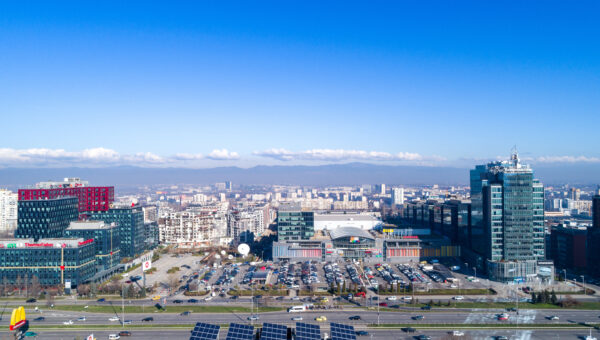
LEED Platinum and beyond: ETC’s commitment to green business
Sustainability in office buildings is often discussed as a goal. In reality, it is experienced in small, everyday details: how stable the indoor climate feels across seasons, how predictable energy use is, and whether the building adapts quietly instead of demanding constant adjustment.
At the European Trade Center, sustainability did not appear as a final layer added to an existing concept. It shaped decisions early on and continues to influence how the building operates today. LEED Platinum is part of that story, but it is not where the conversation ends.
What is what is Leed certificate: Why it matters?
People usually ask what is leed certificate when they are trying to understand whether a building’s sustainability claims translate into real performance. LEED emerged precisely because labels and intentions were no longer enough. It introduced a structured way to evaluate how a building behaves over time, not just how it looks when completed.
Instead of focusing on one system or technology, LEED considers how energy use, materials, water, and indoor conditions interact. This matters because offices are living environments. Their impact is measured daily, through thousands of small decisions made by systems and people inside them.
The importance of a Leed certificate in modern offices
In contemporary office environments, a leed certificate has become a practical reference point rather than a symbolic one. It gives companies a way to assess whether a building supports efficiency and well-being consistently, not just under ideal conditions.
For tenants, this often shows up indirectly. Energy consumption becomes more predictable. Indoor conditions feel stable rather than reactive. Maintenance decisions follow data instead of guesswork. Over time, these patterns shape how comfortable and reliable an office feels as a place to work.
What is the Leed certificate meaning for businesses?
For businesses, the leed certificate meaning goes beyond environmental positioning. It reflects how seriously a company treats long-term operational quality. Choosing a certified building is often less about public messaging and more about risk management and alignment with internal standards.
Employees notice when a workspace feels considered rather than improvised. Partners notice when sustainability is embedded into operations rather than highlighted only in reports. These signals accumulate quietly, influencing reputation without needing emphasis.
LEED certificate requirements: The future of green offices
The leed certificate requirements continue to evolve because work itself is changing. Offices are no longer static containers for desks and meeting rooms. They are adaptive systems that must respond to shifting patterns of use, regulation, and expectation.
At ETC, this future-oriented approach appears in how sustainability is tied to everyday use rather than isolated features.
Sustainable workstyles
Sustainable workstyles emerge when space supports flexibility without waste. Layouts that can adapt, access to daylight, and environments that encourage movement all reduce the need for constant reconfiguration. These choices support both efficiency and comfort, without forcing behavior through rules.
Eco compliance trends
Eco compliance trends increasingly focus on transparency and measurable performance. Buildings are expected to demonstrate how they operate, not just what they promise. Aligning with these trends allows businesses to respond to reporting requirements and evolving standards without restructuring their workplace strategy.
Energy-smart offices
Energy-smart offices rely on systems that respond rather than react. Intelligent controls adjust heating, cooling, and lighting based on real conditions, not fixed assumptions. Over time, this responsiveness reduces waste while maintaining a stable indoor environment that employees can rely on.
Looking beyond certification
A leed certificate building is not defined by a plaque or a rating alone. Its value becomes visible over years of use, through stability, efficiency, and the absence of avoidable friction.
At the European Trade Center, LEED Platinum reflects a broader commitment to green business that treats sustainability as an operational mindset, not a completed task. For organizations looking for office space that supports both responsibility and reliability, that mindset often matters more than any single metric.