Office trends 2026: What will make ETC the smart move for your business?
If the last few years have taught companies anything, it is that offices do not change because trends say they should. They change when people stop using them the same way. Empty desks, half-used meeting rooms, and unpredictable attendance patterns have forced businesses to look at their workplaces more honestly than before.
As 2026 approaches, office trends feel less like forecasts and more like corrections. The focus is shifting away from reinvention and toward spaces that simply hold up under everyday use. This is where the conversation becomes practical, and where environments such as the European Trade Center start to matter for reasons that are not immediately visible.
Top office trends every business should watch
One of the quiet shifts happening across Europe is how deliberate office attendance has become. People do not come in out of habit anymore. They come in when the space offers something their home setup does not. This has changed how companies evaluate what kind of office is worth maintaining.
Many of the current office trends reflect this reality. Offices that perform well are not the most experimental ones, but those that remain usable without constant redesign. Predictability, after years of uncertainty, has become a form of value.
Another noticeable change is how the location is judged. It is no longer only about being central or impressive. It is about how easily the office fits into a normal day, without demanding extra planning or compromises.
How the latest office trends impact productivity?
Productivity rarely collapses all at once. It erodes through interruptions: meetings that start late because technology fails, spaces that are too noisy for focused work, or layouts that force people to relocate multiple times a day.
The latest office trends aim to reduce exactly these small losses. Better acoustic planning, clearer zoning, and more reliable digital infrastructure allow work to continue without constant adjustment. When the environment stops asking for attention, people tend to work more consistently, often without noticing why.
By 2026, offices that ignore this will not fail dramatically. They will simply be used less.
Technology-driven workspaces: The rise of smart offices
Technology has stopped being something you notice first. The most effective systems are the ones you barely register. This is the logic behind smart office trends, which focus less on visible innovation and more on responsiveness.
Smart workspaces today are shaped by systems that quietly adapt: climate control that reacts to real occupancy, lighting that adjusts without instruction, and energy use that remains stable across changing patterns. These elements matter precisely because they do not interrupt the workday.
Digital collaboration
One of the clearest return to office trends is that people come in mainly to work together. Offices are no longer places to sit alone with a laptop. They are places to solve problems, align priorities, and make decisions faster.
When digital collaboration tools work reliably, physical presence feels purposeful. When they do not, even the best-designed space struggles to justify itself. Reliability has become more important than novelty.
Connected workspaces
The new office trends also point toward better coordination between systems that were once separate. Access, climate, lighting, and workspace management increasingly function as a single environment.
When this coordination works well, offices feel calm and consistent, even as daily usage changes. Employees may not think about the systems behind it, but they feel the difference almost immediately.
Looking toward 2026
By 2026, successful offices will not be defined by how many trends they adopted, but by how little effort it takes to use them. The most valuable spaces will be those that support work without demanding attention.
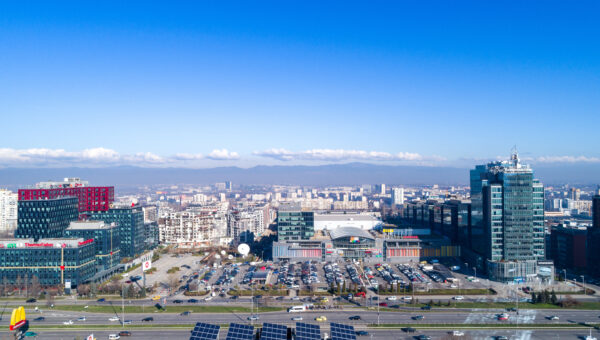
The European Trade Center reflects this approach by focusing on stability, connectivity, and adaptability rather than constant reinvention. In a period shaped by adjustment rather than disruption, that quiet reliability is often what makes an office decision a smart one.