5 main advantages of smart office buildings for teams and companies
Smart office buildings are often described through features: systems, automation, dashboards. What people talk about much less is how those buildings actually feel after a few months of use. Whether the space still works on a busy Tuesday. Whether teams move through the day without constantly adjusting to the environment.
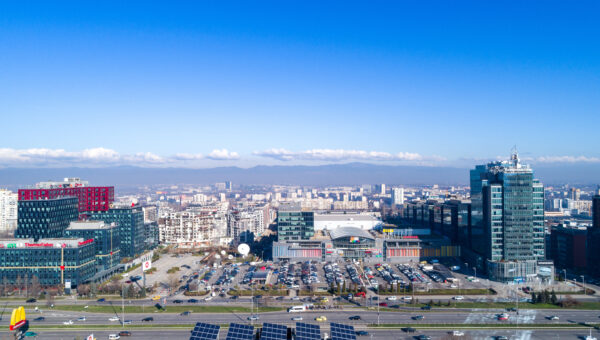
In places like the European Trade Center, smart design shows its value quietly. Not by drawing attention to itself, but by removing friction that usually goes unnoticed until it disappears.
Sustainable office solution: How smart buildings make a difference?
A real sustainable office solution is not something employees have to think about. It is something they benefit from without changing their behavior. Smart buildings work when sustainability is built into the way the space reacts to everyday use, not when it relies on perfect discipline.
Instead of fixed settings, the building responds to how people actually occupy it. Energy use, comfort, and space adapt gradually, which is why sustainability remains effective over time rather than fading after the first year.
Connected collaboration
Collaboration rarely follows a script. Teams move between discussions, quiet work, and spontaneous exchanges, often in unpredictable ways. Smart offices support this movement without forcing people to reconfigure technology or space every time they change focus.
When collaboration tools and physical spaces are aligned, interaction feels natural. Meetings start on time. Shared areas invite conversation instead of blocking it. Technology stays present, but not demanding.
Energy intelligence
Energy is one of the first places where smart buildings prove their value, even if occupants never notice it directly. Intelligent systems adjust heating, cooling, and lighting based on real occupancy instead of assumptions.
This quiet optimization defines many smart buildings solutions. Consumption drops without comfort being sacrificed, and operational patterns remain stable across different seasons and working rhythms.
Flexible work zones
Work rarely happens the same way every week. Teams expand, contract, and reorganize projects. Smart buildings recognize this by allowing work zones to change without disruption.
Flexible areas make it easier to shift between collaboration and focus, without redesigning entire floors. This adaptability supports continuity, which is often more valuable than constant novelty.
Wellbeing Boost
Well-being at work is shaped by small, persistent factors: air quality that does not fluctuate, lighting that does not strain the eyes, and temperatures that remain predictable throughout the day.
Smart offices contribute to a wellbeing boost by stabilizing these conditions in the background. When the environment stops demanding attention, people conserve energy for their work instead.
Data-driven insights
Behind the scenes, smart buildings generate information about how space is used. These data-driven insights help operators refine layouts, manage resources, and anticipate maintenance needs.
Over time, this feedback loop improves the building itself, allowing it to evolve based on evidence rather than assumption.
Workplace wellness solutions in smart office buildings
Effective workplace wellness solutions are rarely defined by a single amenity. They emerge when the space supports mental and physical comfort consistently, day after day.
Smart office buildings reduce environmental stress by keeping conditions stable and intuitive. People spend less time adjusting to the space and more time staying focused, which has a cumulative effect on well-being.
Key advantages of smart buildings for teams and companies
For organizations, the advantages of smart buildings show up in subtle ways. Fewer interruptions. Less time lost to technical issues. Spaces that remain usable even as working patterns shift.
Teams adapt faster because the environment adapts with them. That reliability becomes part of how work gets done, even if it is rarely discussed explicitly.
Benefits of smart buildings for teams and businesses
The long-term benefits of smart buildings are not about constant optimization, but about resilience. Companies operating in smart environments can adjust to growth, hybrid models, or new workflows without repeatedly rethinking their physical space.
At the European Trade Center, this approach is applied with a long view. Smart systems are there to support people, not to impress them, and that distinction often determines whether a building remains relevant over time.
Closing reflection
The best smart offices are the ones people stop noticing. Not because they are unremarkable, but because they work without getting in the way.
When a building supports focus, collaboration, and well-being quietly and consistently, it becomes more than a workplace. It becomes a stable foundation for how teams actually work.